
Gypsum, Agnes & details
Attic finishing
Finishing sloping walls, ceilings and difficult connections with gypsum boards or Agnes panels and skirting.
Explore this serviceINTERIOR WALL INSULATION
Does your home have no cavity or one that is too narrow, or can the outside not be changed? Then insulating on the inside can be the answer. Noordvaro builds an insulated stud lining against the existing wall and finishes it smoothly with gypsum board.
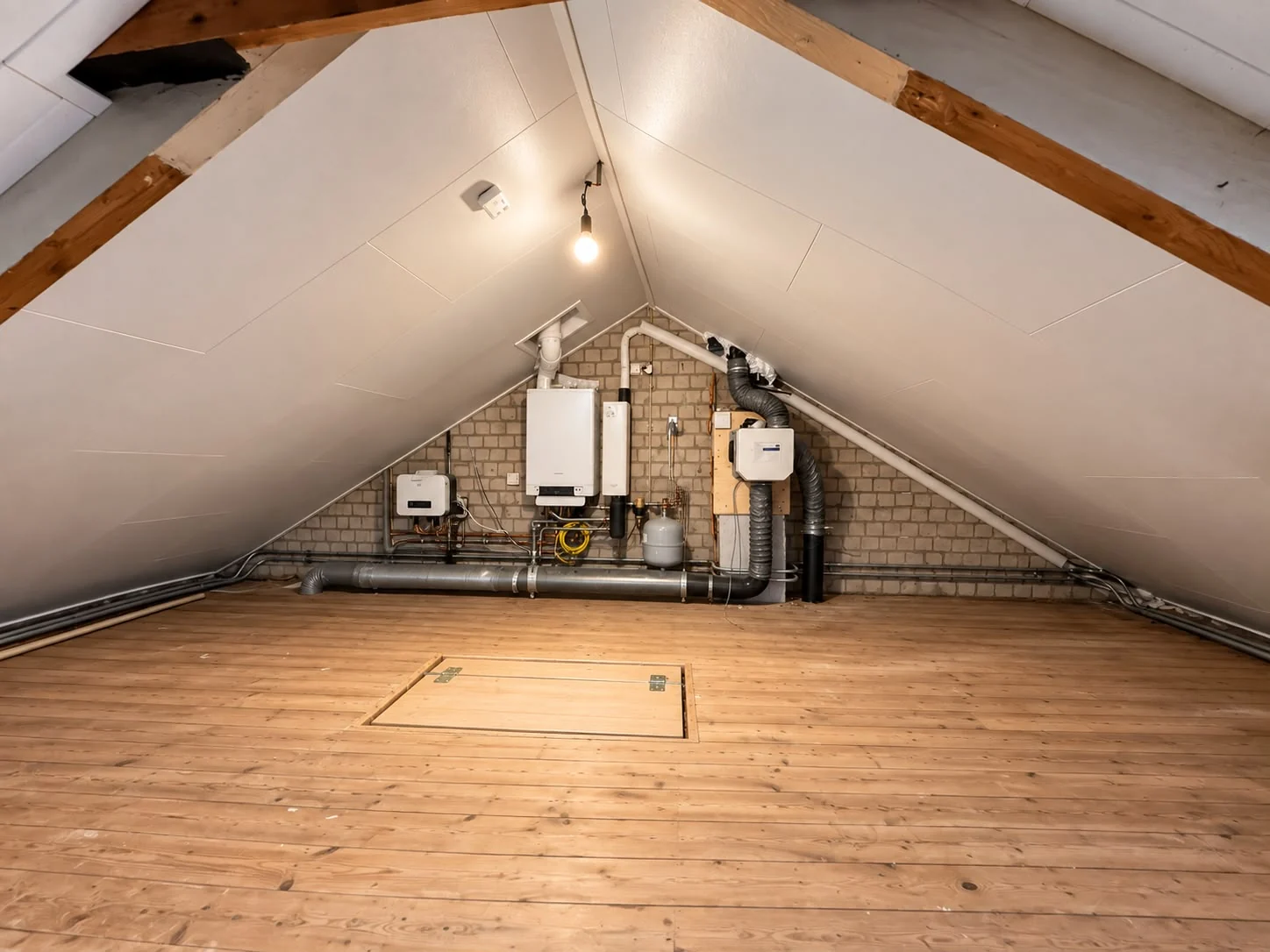
Stud lining on the inside
For interior wall insulation we fix battens against the existing external wall. Insulation, usually mineral wool, goes between the battens, with a vapour-control layer on the warm side. We then finish the wall with gypsum boards, ready for paint or wallpaper.
The room gets slightly smaller: the thickness of the lining comes off the room. That is why we discuss the insulation thickness upfront, along with the connections to window frames, sills and ceiling, and what needs to happen with sockets and radiators.
Warmer walls, fewer draughts
Insulating on the inside makes most sense when insulating from outside or in the cavity is not an option.
SCOPE
A dry, sound wall is the basis; then we choose the build-up.
Damp problems in the wall are solved or investigated first; we do not insulate over a wet wall. We do not relocate electrics or installations ourselves.
METHOD
Careful work on the connections prevents cold bridges and condensation.
We check the condition of the wall and the details around frames and floor.
Battens, insulation thickness and vapour-control layer are matched to the situation.
We fix the battens and fit the insulation.
On the warm side we connect the layer carefully, including around frames.
The wall is finished with gypsum boards; joints and corners are made smooth.
PRICE
With insulation, the area and the existing build-up determine most of the price.
The square metres of roof, floor, wall or ceiling to be insulated.
What is there now, whether something has to be removed first, and how flat and dry the surface is.
The insulation value you want and the material determine the thickness and build-up.
Whether the insulation is finished with boards, and whether sealant and painting are included.
Our website shows no fixed prices, because every home is different. You receive a quotation for your situation, and we only start once you agree with the work and the price.
BUILD-UP AND MATERIALS
For a stud lining we work with timber or metal battens, mineral wool insulation and a vapour-control membrane on the inside. The insulation thickness determines how much heat loss you save and how much space the wall takes up.
Gypsum boards give a smooth, paintable surface. Our own finishing crew can include simple painting; skirting and sills are finished to fit.
WORK CONTEXT
Our photo set does not yet include a stud lining. These images show other Noordvaro board work for illustration.
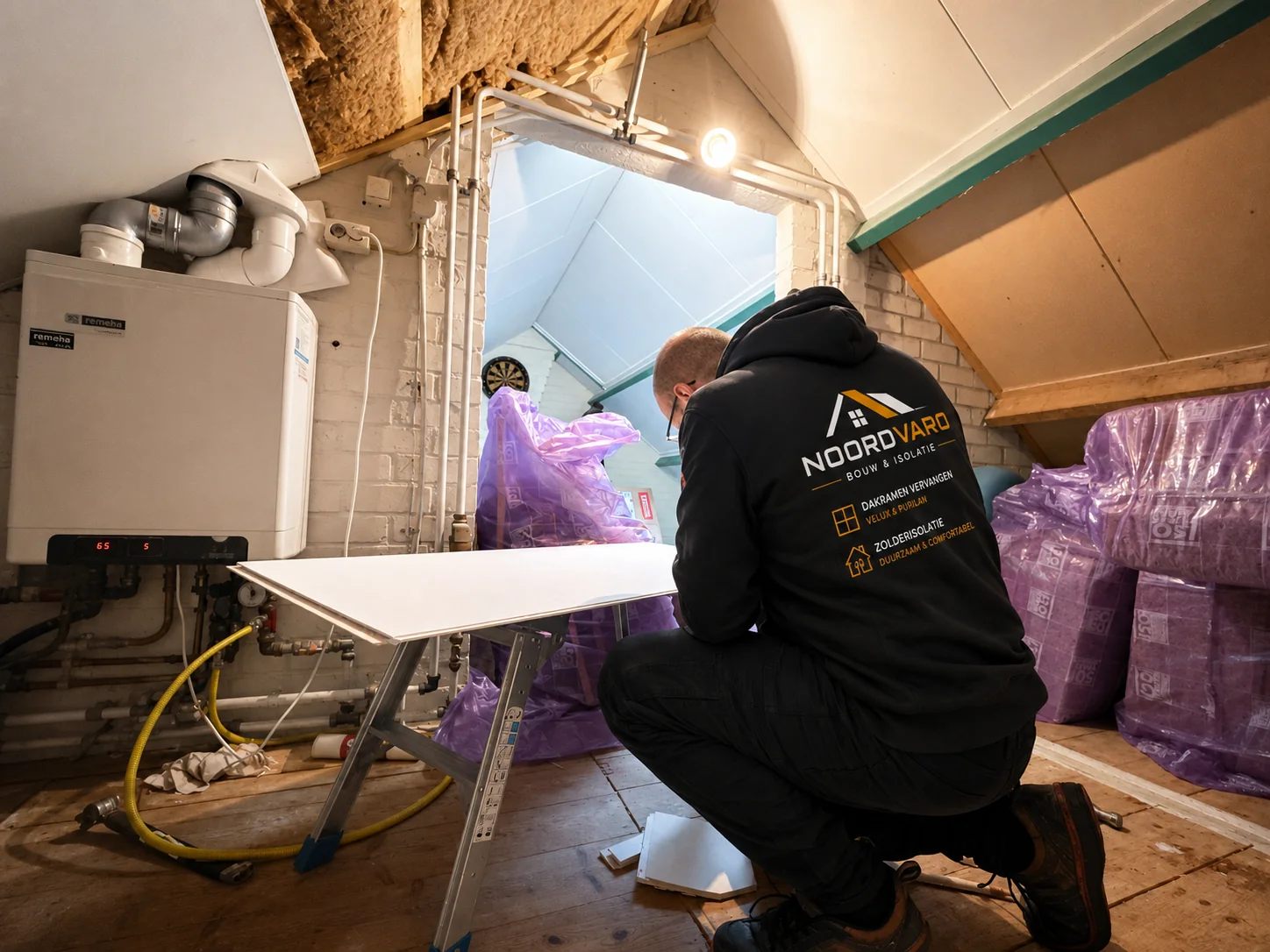
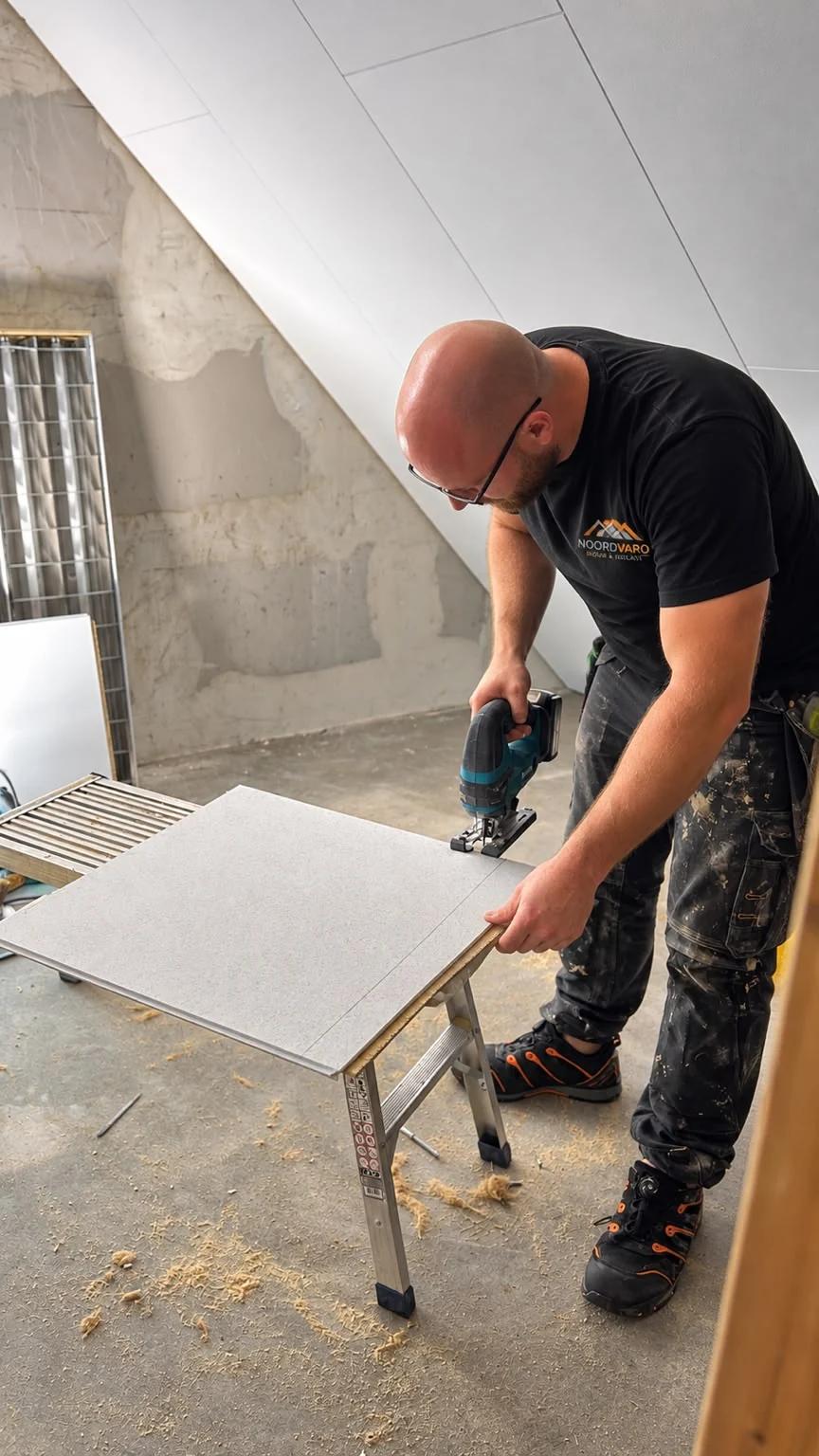
The photographs show real Noordvaro work and relevant working situations. They are not a before-and-after sequence from one project.
View project workWORKING AREA
From Assen we insulate walls across Drenthe, in Groningen and the rest of Northern Netherlands, for homeowners, owners’ associations and project partners.
Explore the full service areaFREQUENTLY ASKED QUESTIONS
About lost space, damp and finishing.
That depends on the insulation thickness and the battens. Usually it is a few centimetres up to about ten centimetres. We discuss this upfront.
That is why we fit a vapour-control layer on the warm side and connect it carefully. The existing wall must be dry.
Interior wall insulation is one of the measures Noordvaro is registered for in the Nij Begun insulation approach. Nij Begun and SNN decide whether your home qualifies.
Sockets need to be moved to the new wall. An installer does that work; we coordinate the order with you.
Yes. Skirting, sills and simple painting can be included in the same job.
WARMER WALLS
Send photos of the wall, the frames and any damp patches, with rough dimensions.